
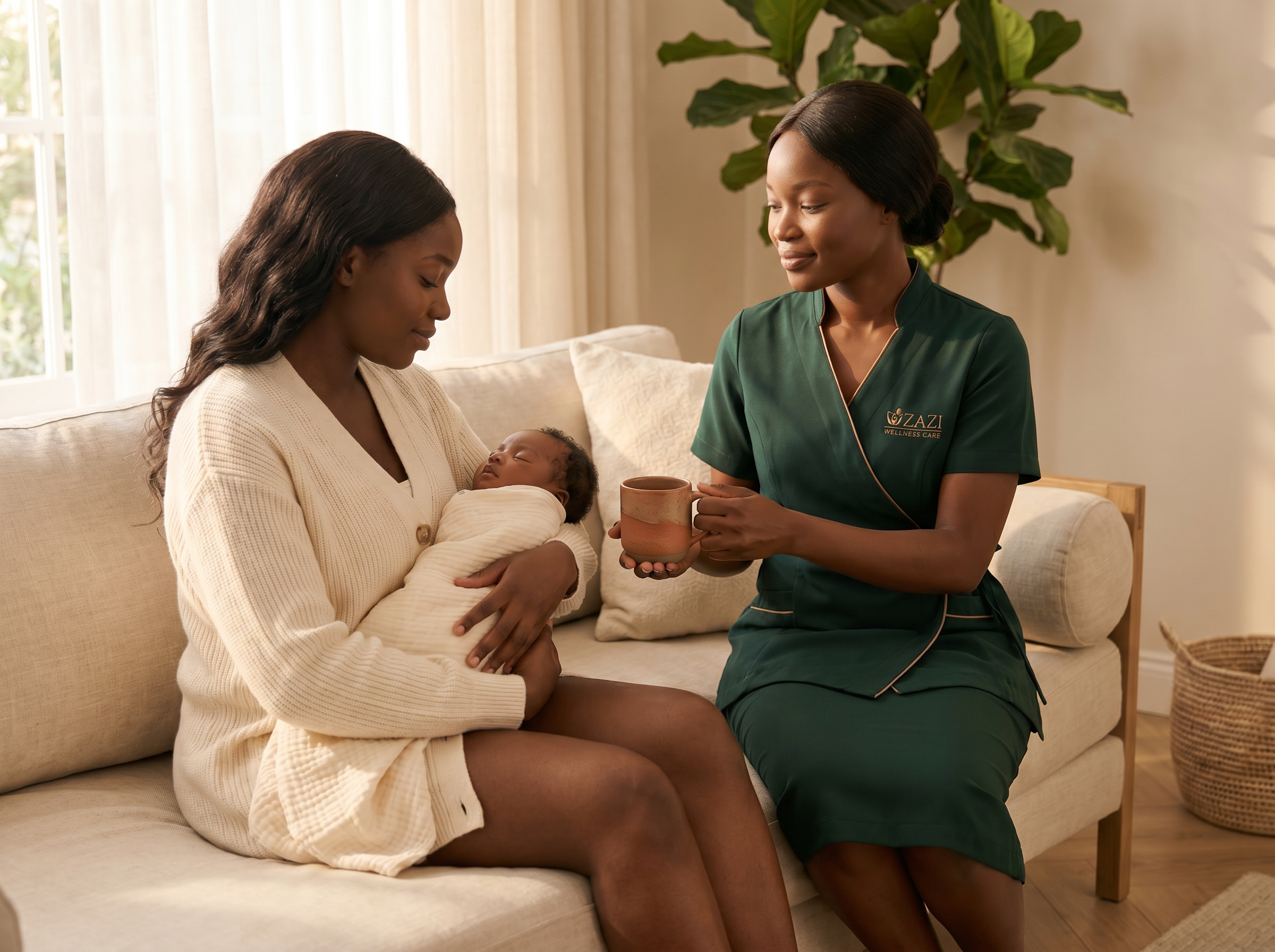
In many Western countries, a new mother is congratulated, sent home from the hospital within 48 hours, handed a follow-up appointment for six weeks later, and then — essentially — left to figure it out. We watch the cultural fallout of this approach play out every day: skyrocketing rates of postpartum depression, breastfeeding failure attributed to "low supply," and a generation of mothers who describe their fourth trimester as the loneliest season of their lives.
African mothers were never meant to do it alone. And we still don't have to.
What is the fourth trimester?
The "fourth trimester" is the term coined by pediatrician Dr. Harvey Karp to describe the first three months of a baby's life — a period when the newborn is essentially still adjusting to existence outside the womb, and when the mother's body is undergoing the most dramatic physiological changes she will likely ever experience in such a short window.
Globally, maternal-health experts now consider this window — particularly the first 40 days — as one of the most critical, and most under-supported, periods in a woman's entire life. The American College of Obstetricians and Gynecologists has formally redefined postpartum care as an ongoing process — not a single six-week visit.
The African wisdom we already had
Long before contemporary postpartum-care literature existed, our grandmothers practiced what the world is now rediscovering. Across the continent, our postpartum practices share a striking pattern:
- A protected 40-day window (called ukaaji in parts of East Africa) where the mother stays home, rests, and is cared for by other women in her family.
- Specific nourishing foods — bone broths, fermented porridges, leafy greens, ghee, and warming herbs designed to restore the mother's body.
- Daily physical care — gentle massage, warm baths, and abdominal binding to support uterine recovery.
- Communal mothering — the new mother is never alone with her infant; aunties, cousins, mothers-in-law, and neighbors rotate through to feed her, hold the baby, and listen to her.
This is not "old-fashioned" care. It is, increasingly, the kind of trusted, time-tested care the world is rediscovering.
Where modern life has broken the system
Urbanization, the rise of nuclear families, women in formal employment with short maternity leaves, and the loss of multi-generational households have quietly dismantled this safety net. A 28-year-old first-time mother in Nairobi today is often:
- Discharged from a busy maternity ward within hours of birth.
- Returning to a small apartment without her own mother nearby.
- Expected back at work within 90 days.
- Receiving conflicting breastfeeding advice from social media instead of an experienced lactation consultant.
- Quietly battling postpartum anxiety she has been taught to call "just being tired."
The result? A generation of mothers running on fumes — and quietly grieving a kind of care they sense was meant for them but cannot quite reach.
"My grandmother told me how, after she gave birth to my mother, my great-aunt came and stayed in her hut for 40 days. She fed her, washed her, sang to her, and held the baby through the night. I had none of that. I cried in my bathroom every day for two weeks." — A client, age 31, Nairobi
What modern, thoughtful postpartum care looks like
At Uzazi Wellness Care, our postpartum care plan is designed to bring the wisdom of the 40-day window back into reach for modern Kenyan families — paired with careful screening and trusted, proven support. A typical Uzazi postpartum care plan includes:
Days 1–7: Recovery foundation
- Daily 60–90 minute home visits by a trained postpartum doula or nurse.
- Maternal vitals, perineal/cesarean wound checks, lochia monitoring.
- Newborn weight checks and feeding observation.
- Lactation support and latch correction.
- Light meal preparation focused on warming, nourishing African staples.
Days 8–21: Stabilization
- 3–4 home visits per week.
- Postpartum mood screening (Edinburgh Postnatal Depression Scale).
- Sleep support coaching for the family.
- Continued nutrition support and family meal coordination.
- Gentle abdominal binding when desired and appropriate.
Days 22–40: Reintegration
- 1–2 visits per week tapering toward independence.
- Return-to-movement coaching (pelvic floor awareness, gentle walking).
- Partner coaching for ongoing support.
- Coordination with the OB-GYN for the 6-week visit.
The five questions every African mother deserves to be asked
If no one is asking you these in the first 40 days after birth, your postpartum support is incomplete:
- How is your bleeding? (Color, amount, clots.)
- How is the baby feeding? (Latch, frequency, output.)
- How is your mood? (Not "tired" — your mood.)
- How are you eating and drinking? (Specifically.)
- Who is helping you, and how often?
You don't have to do this alone
The fourth trimester is sacred. It is the season in which a mother becomes a mother, and a baby learns the world is a safe place. It deserves intention. It deserves skilled support. And — for African mothers in particular — it deserves a return to the wisdom we never should have lost.
If you are pregnant now, or recently postpartum, please reach out. Whether or not you become an Uzazi client, we are happy to talk through what a good fourth-trimester plan looks like for your family. Book a consultation or email info@legacycareafrica.com.
This article is for general educational purposes only and does not replace individualized medical advice from your obstetrician or qualified clinician. If you are experiencing severe postpartum symptoms — heavy bleeding, fever, chest pain, severe mood symptoms, or thoughts of harm to yourself or your baby — please contact your clinician or local emergency services immediately.
Need postpartum support?
Uzazi Wellness Care offers structured 40-day postpartum care plans across Nairobi and beyond.
Book a Consultation