
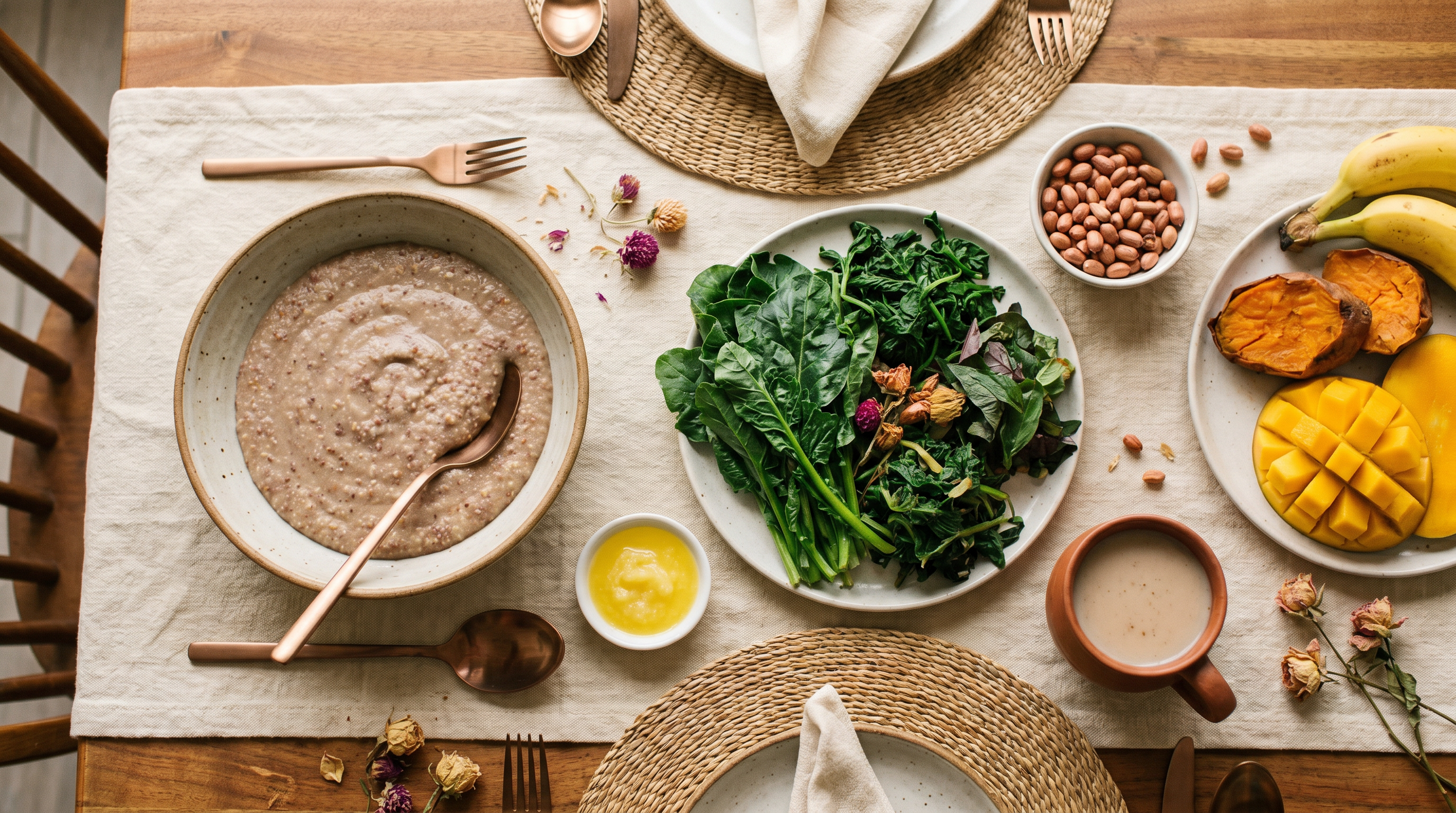
Walk into almost any antenatal clinic in Nairobi today and the prenatal nutrition advice is largely the same as the one you would receive in London, Toronto, or Sydney: take folic acid, take iron, eat vegetables, avoid sushi (which most of our patients have never eaten anyway). The advice isn't wrong. It's just incomplete — because it ignores the fact that long before prenatal multivitamins existed, African mothers were raising healthy babies on diets specifically designed by generations of women who knew exactly what a growing baby needed.
Our grandmothers were nutritionists. Most of us just stopped listening.
The science is catching up to our kitchens
Recent research from the World Health Organization and the UNICEF Maternal Nutrition framework highlights the same nutrients again and again: iron, folate, calcium, omega-3 fatty acids, choline, zinc, iodine, and high-quality protein. Look at what our great-grandmothers fed pregnant women, and these nutrients are everywhere — embedded into staple foods, often in more bioavailable forms than modern processed alternatives.
What follows is not "alternative" nutrition. It is trusted, time-tested prenatal nutrition rooted in foods Kenyan mothers can actually access, afford, and enjoy — in the kitchens they already cook in.
The indigenous prenatal pantry
Sorghum & finger millet (uji)
Slow-fermented sorghum or finger millet porridge — uji — is arguably the single most important food in the African prenatal diet. Why?
- High in iron, magnesium, and B vitamins — critical for hemoglobin production during pregnancy.
- Fermentation reduces antinutrients (phytates) and dramatically increases mineral absorption.
- Slow-releasing carbohydrates stabilize blood sugar and prevent gestational-diabetes-style spikes.
- Warming, gentle on nausea — particularly in the first trimester.
Tip: ferment your uji flour for 24–48 hours with a small starter of yogurt or previous-batch uji. The slight sour taste is the sign of nutrition activated.
Sukuma wiki, terere, mrenda, managu & other indigenous greens
African leafy greens are nutritional powerhouses — and most of them outperform imported kale or spinach on virtually every metric.
- Folate — critical for preventing neural-tube defects in the first trimester.
- Calcium & magnesium — especially in managu (African nightshade) and terere (amaranth leaves).
- Iron — when cooked with vitamin-C-rich tomatoes, absorption is significantly enhanced.
- Fiber & satiety — helps manage constipation, a common pregnancy complaint.
Aim for 2–3 servings of dark leafy indigenous greens daily.
Groundnuts, simsim & cashews
Groundnuts (peanuts), sesame (simsim), and cashews provide what modern nutrition science calls "high-quality plant protein" — but they were prenatal staples in our grandmothers' kitchens long before the term existed.
- Protein, healthy fats, and zinc — supporting fetal growth and maternal tissue repair.
- Choline (especially in groundnuts) — critical for fetal brain development.
- Convenient for snacking between meals to manage nausea and stabilize energy.
A small handful daily, or 1–2 tablespoons of groundnut paste stirred into uji, is a beautiful baseline.
Ghee, samli & full-fat dairy
Modern nutrition advice in Western countries often demonized full-fat dairy and clarified butter (ghee/samli) for decades. That advice has been quietly walked back. For pregnant women in particular, healthy saturated fats are critical for fetal brain development and the absorption of fat-soluble vitamins (A, D, E, K).
- Full-fat milk, fermented mursik (where culturally available), and ghee provide vitamin A, vitamin K2, and calcium in a form the body absorbs efficiently.
- Ghee/samli is shelf-stable, lactose-free, and gentle on digestion.
Small fish & bone broths
If you have access to omena (small dried fish) or sea fish, these are nutritional gold during pregnancy:
- Omega-3 fatty acids (DHA) — critical for fetal brain and eye development.
- Iodine — essential for fetal thyroid development.
- Bioavailable iron and B12.
- Calcium — particularly in small fish eaten whole with bones.
Bone broths, simmered slowly with a splash of vinegar to extract minerals, are deeply restorative — especially in the third trimester.
Beans, njahi (black beans) & githeri
Among the Kikuyu, njahi (lablab beans) hold near-sacred status for pregnant and postpartum women — and modern nutrition science confirms why:
- High in iron, folate, fiber, and plant protein.
- When paired with a starch like maize (forming githeri), they create a complete protein.
- Black-pigmented beans contain antioxidants that may support placental health.
A sample day of African prenatal nutrition
- Breakfast: Fermented sorghum or finger millet uji with a tablespoon of groundnut paste and a drizzle of ghee. A piece of seasonal fruit (paw-paw, mango, banana).
- Mid-morning: A handful of roasted groundnuts or boiled njugu (Bambara nuts).
- Lunch: Ugali or brown rice with sukuma wiki cooked with tomato and a small portion of beans or lean beef.
- Afternoon: A glass of full-fat milk or fermented mala. A piece of fruit.
- Dinner: Githeri or fish with mrenda/managu (indigenous greens) and a sweet potato.
- Before bed: A warm cup of milk with a teaspoon of honey, or a small bowl of fermented porridge.
What to be cautious about
Heritage is wise, but not every inherited practice is risk-free during pregnancy. Be cautious of:
- Untested herbal preparations — many indigenous herbs have not been studied for pregnancy safety. Always check with your clinician.
- Raw or undercooked meats and unpasteurized dairy — risk of listeria and toxoplasmosis.
- Excessive salty foods — particularly if you have any tendency toward high blood pressure.
- Large predatory fish — mercury risk. Stick to smaller fish.
The honest truth
The best prenatal nutrition for a Kenyan mother is not imported. It is not expensive. It is largely sitting in the indigenous foods our grandmothers were never given enough credit for. Combine those foods with your prenatal vitamins, your iron and folate supplementation as prescribed by your OB-GYN, regular antenatal visits, and adequate hydration — and you are building the kind of nutritional foundation babies thrive on.
If you want help putting this into practice for your specific situation — your trimester, your dietary restrictions, your access to particular ingredients — our Uzazi nutrition team is here for you.
This article is for general educational purposes only and does not replace personalized medical or nutritional advice from your obstetrician or registered nutritionist. Always consult your clinician before making significant dietary changes during pregnancy, especially if you have a medical condition such as gestational diabetes, hypertension, or food allergies.
Want personalized prenatal nutrition guidance?
Uzazi Wellness Care offers in-home nutrition consultations with registered nutritionists who understand Kenyan kitchens.
Book a Consultation